
Jul 10, 2025 · JKT
How to Choose the Right Excavation Contractor for Your Utah Custom Home
When you break ground on a custom home in Park City, Heber City, or anywhere along the Wasatch Back, the excavation contractor you choose sets the trajectory for the entire project. A skilled operator saves weeks on the schedule, protects surrounding terrain, and delivers a pad that every subsequent trade can trust. A poor one creates problems that compound through framing, concrete, and beyond.
Start with Fleet and Equipment
Utah mountain sites demand a wide range of machines. A single excavator and a truck are not enough for a 10,000-square-foot basement cut on a steep hillside in Deer Valley. Ask prospective contractors what iron they own outright. Renting equipment for every job introduces scheduling risk and signals a lack of commitment to the work. Look for a contractor with dozers for mass grading, excavators in multiple size classes, articulated haul trucks for moving material on grades, and compaction equipment for engineered backfill.
Fleet size also tells you about capacity. If a contractor is running one crew, your project competes with every other job they take on. Larger fleets allow parallel operations and dedicated crews for each active site, which means fewer weather-delay pile-ups and more predictable timelines.
Verify Mountain Terrain Experience
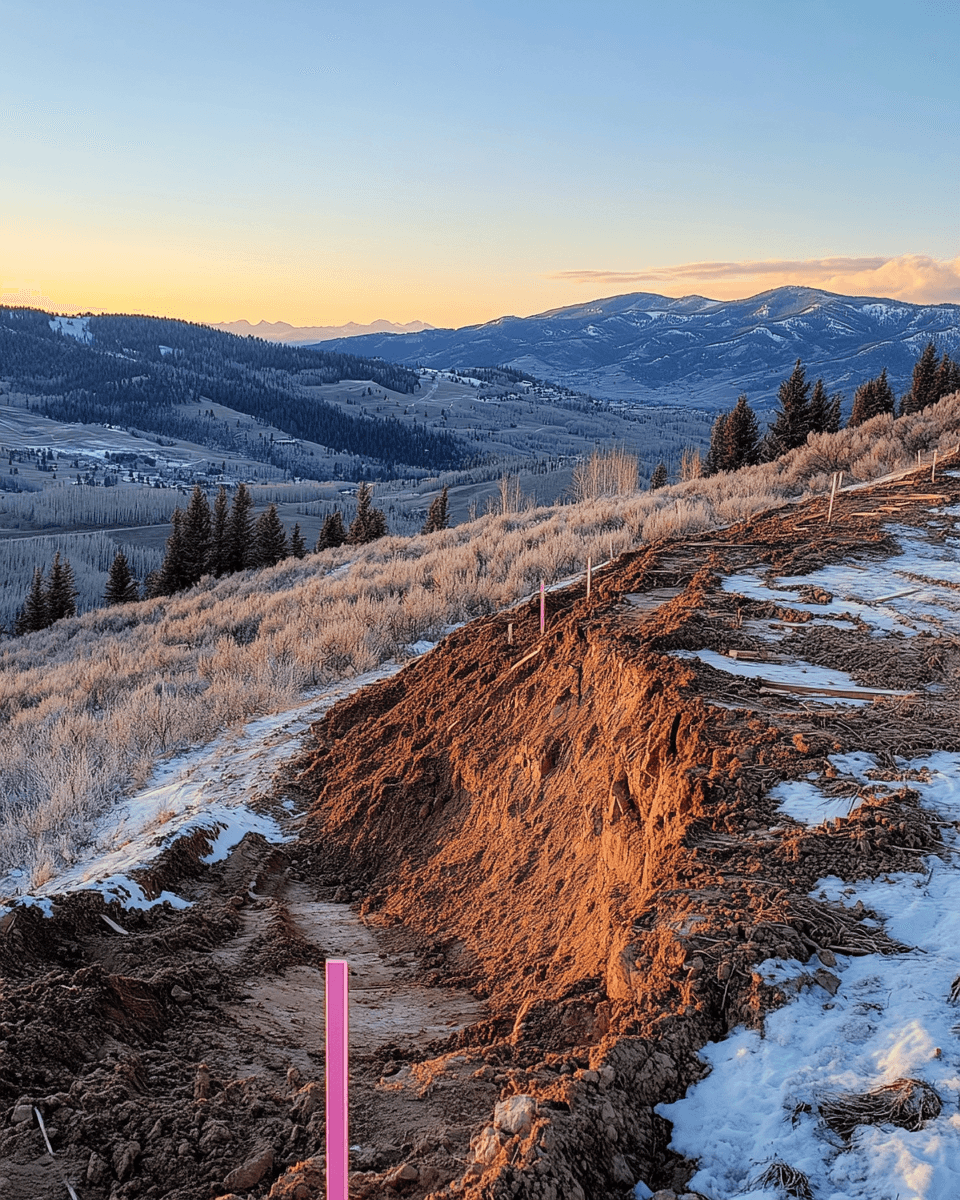
Excavation in the Wasatch Back is fundamentally different from flatland work along the Wasatch Front. Elevations above 6,500 feet mean shorter work seasons, frozen ground into May, and soils that shift between clay, decomposed granite, and solid rock within the same lot. The contractor you choose should have deep experience with bench cuts on steep slopes, rock removal without blasting near existing structures, and managing stormwater on mountain sites during spring runoff.
Ask for specific project references in your area. A contractor who has completed basement excavations in Promontory, Tuhaye, Colony at White Pine, or the Solamere neighborhood understands the soil profiles, county permitting requirements, and logistical challenges unique to Summit and Wasatch counties. General experience is not a substitute for local knowledge.
Evaluate Their Relationship with Builders
The best excavation contractors have long-standing relationships with the region's top builders. These relationships exist because they deliver consistently. Ask which builders they work with regularly and whether those builders would recommend them directly. In a market as tight-knit as Park City, reputation travels fast. A contractor trusted by multiple premier builders has earned that trust through years of reliable performance, clean sites, and zero-excuse delivery.
Communication matters as much as capability. Your excavation contractor should provide clear timelines, proactive updates when conditions change, and a single point of contact who understands your project. If you cannot get a straight answer during the bidding process, that will not improve once the machines are on site.
Understand Pricing Beyond the Bottom Line
The lowest bid is rarely the best value in excavation. Mountain sites carry inherent unknowns: subsurface rock, unexpected water tables, unstable slopes that require additional retention. A good contractor prices honestly, accounts for contingencies, and explains what could change the number. A low bid that balloons with change orders costs more than a realistic estimate from the start.
- Ask whether rock removal is included or priced separately
- Confirm that erosion control and SWPPP compliance are in the scope
- Verify that the bid covers final grade to the tolerances your builder requires
- Check whether mobilization and demobilization are included
Choosing the right excavation contractor is not about finding the cheapest option. It is about finding the team with the equipment, the local expertise, and the track record to get your project started right. In luxury custom home construction, the foundation of a great build is literally the ground it sits on.
RELATED SERVICES
Services referenced in this piece
LET'S BUILD
Ready to break ground?
Call, email, or send us the plans. We'll set up a site walk.