
SERVICE
Rock Walls & Slope Retention
Natural boulder retaining walls and engineered slope retention for mountain properties — built to hold and built to last.
THE PITCH
Structural Retention Meets Natural Stone Craft
Building on sloped terrain in the Wasatch Back means managing grade — and grade changes on mountain lots are rarely subtle. A home site that drops eight feet from the street, a driveway that climbs thirty feet across two hundred linear feet, a backyard that falls away to a drainage swale. Rock retaining walls are the structural and aesthetic solution that makes these sites buildable.
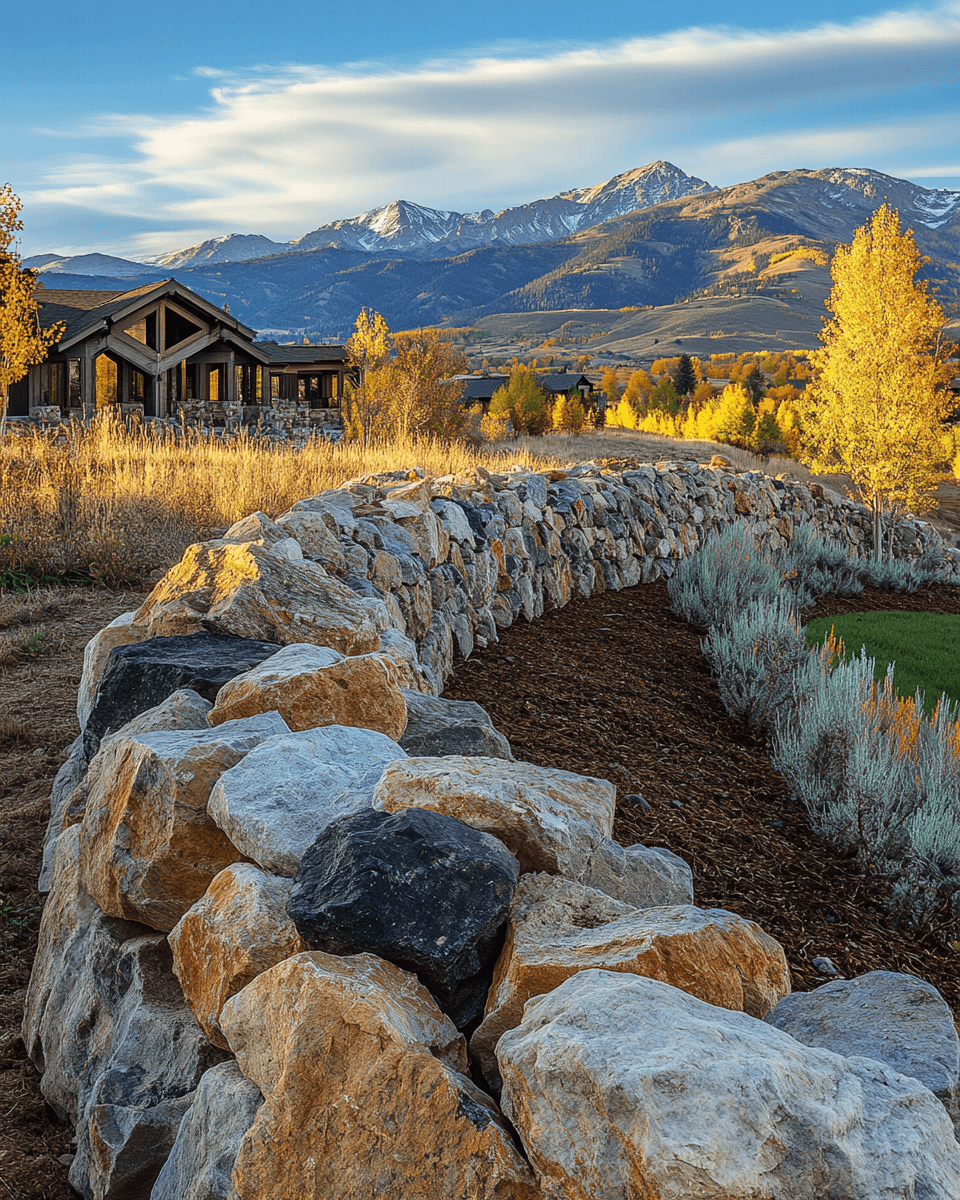
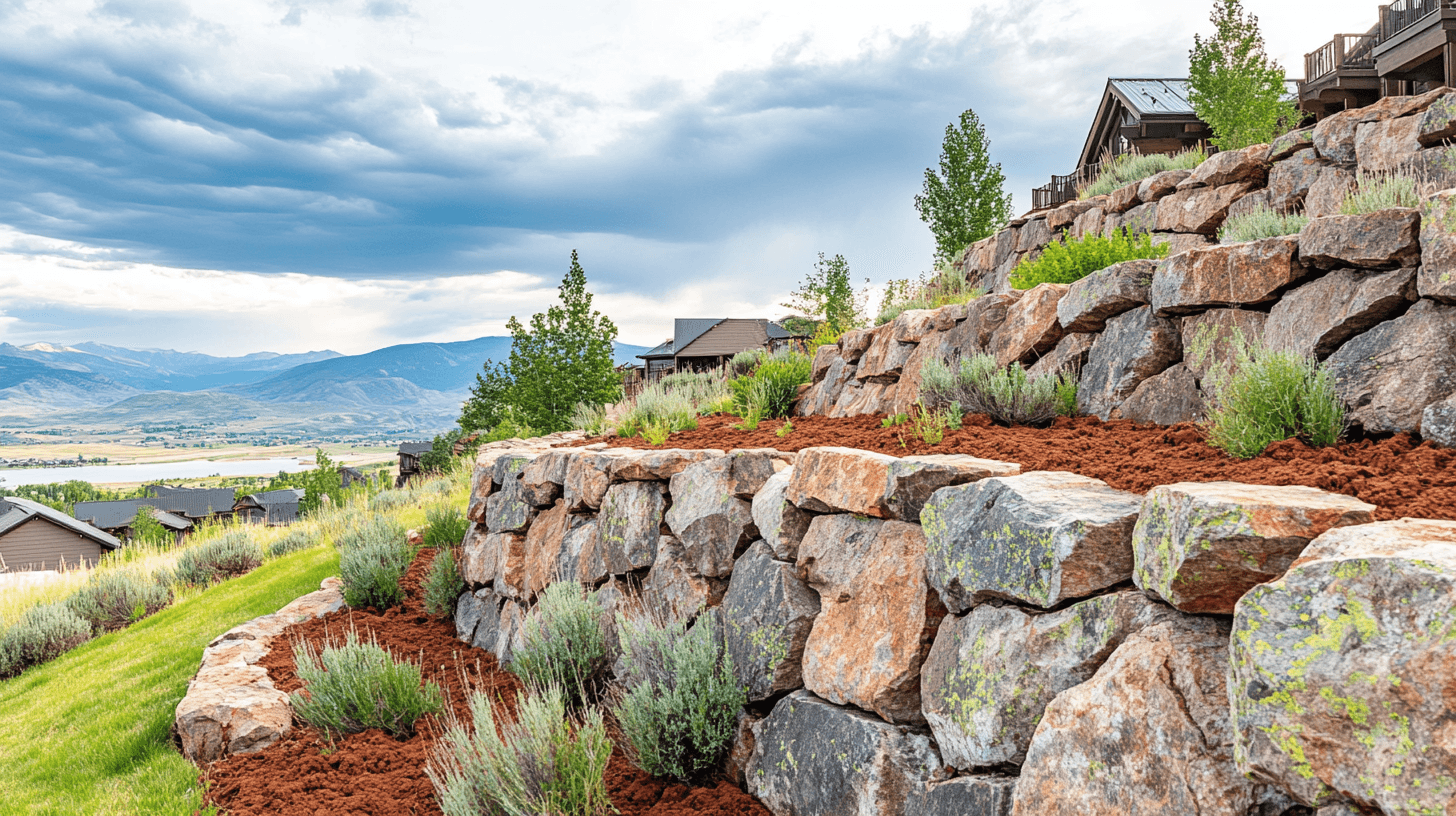
Beyond structural necessity, rock walls define the character of a mountain property. A well-placed boulder wall transforms an unusable slope into a terraced outdoor living area, prevents erosion, and grounds the architecture in the landscape. We source native Wasatch stone and place it with operators who have set thousands of boulders — craft work performed with heavy iron.
BY THE NUMBERS
Rock Walls Built
WHAT'S INCLUDED
Scope of work
01
Natural Boulder Walls
Individually placed 2–6 ton boulders keyed together for gravity-retention on steep lots.
02
Stacked Stone Walls
Uniform coursed stone for a cleaner, more architectural retaining wall appearance.
03
Engineered Retaining Walls
Geogrid-reinforced walls designed to structural engineer specs for heights exceeding gravity limits.
04
Decorative Landscape Walls
Lower-height walls for defining garden beds, pathways, and outdoor living zones.
05
Foundation Below Frost Depth
Wall foundations set below the 42–48 inch frost line on compacted bearing material.
06
Drainage System Installation
Perforated pipe, filter fabric, and free-draining gravel behind every retaining wall.
07
Structural Backfill
Compacted engineered fill placed in lifts with documentation for structural sign-off.
08
Boulder Selection & Placement
Hands-on stone selection at quarry with precision hydraulic-thumb placement on site.
09
Engineering Coordination
Direct coordination with structural engineers and landscape architects throughout construction.
10
Terracing & Grade Transitions
Multi-tier wall systems with planting beds and access between levels for outdoor living.
OUR PROCESS
How a project moves
Every job — from first walk to final grade — moves through six deliberate stages.
Site Assessment & Engineering
Evaluate retention needs, soil conditions, and surcharge loads with structural engineer review.
Stone Selection & Sourcing
Hand-select boulders and wall stone from Wasatch-area quarries matched to site geology.
Foundation Preparation
Excavate below frost depth and compact bearing material for a stable wall base.
Wall Construction in Courses
Place stone in courses with geogrid reinforcement on engineered walls, keying each piece.
Backfill & Drainage
Install drainage system and compact structural backfill in lifts behind the wall face.
Final Grading & Landscape Tie-In
Grade surrounding areas and coordinate with landscape trades for planting and hardscape.
Site Assessment & Engineering
Evaluate retention needs, soil conditions, and surcharge loads with structural engineer review.
Stone Selection & Sourcing
Hand-select boulders and wall stone from Wasatch-area quarries matched to site geology.
Foundation Preparation
Excavate below frost depth and compact bearing material for a stable wall base.
Wall Construction in Courses
Place stone in courses with geogrid reinforcement on engineered walls, keying each piece.
Backfill & Drainage
Install drainage system and compact structural backfill in lifts behind the wall face.
Final Grading & Landscape Tie-In
Grade surrounding areas and coordinate with landscape trades for planting and hardscape.
CONDITIONS & EXPERTISE
Where we thrive
Rock walls at elevation face forces lower-altitude projects never see. Frost heave at 40+ inches can lift an improperly founded wall in a single winter. Saturated clay behind a wall doubles lateral load if drainage is not installed correctly. We install drainage fabric, perforated pipe, and free-draining gravel behind every wall regardless of height — and set every foundation below frost depth on verified bearing material.
Rock Walls Completed
Max Boulder Weight We Place
Frost Depth Foundation
FEATURED PROJECT
A recent build
Kamas, UT
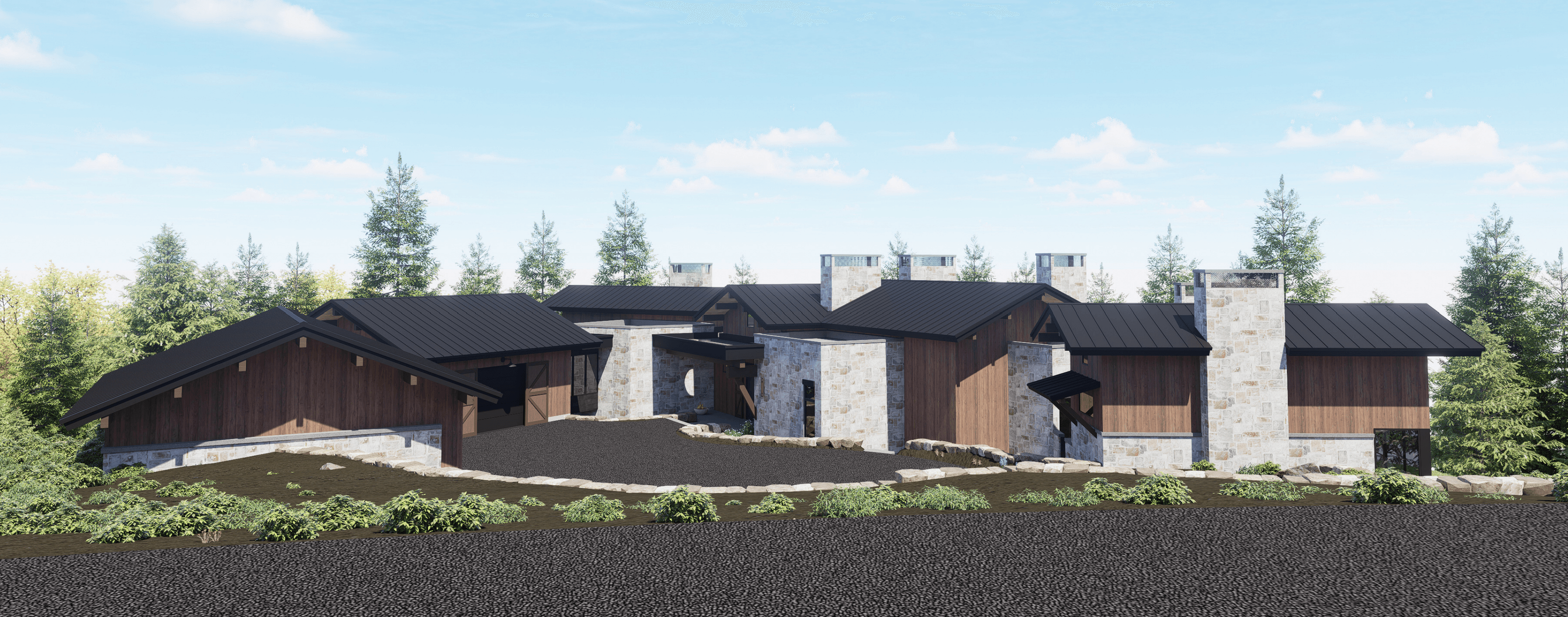
Tuhaye — Lot 112
Site prep for a 9,000+ square-foot luxury home in the Cougar Moon neighborhood of Tuhaye. Mass excavation across steep, rocky terrain with engineered backfill, precision contouring for multiple structural elevations, walk-out basement access, retaining wall prep, and rough grading for garage access and utility tie-ins.
FREQUENT QUESTIONS
Good questions deserve straight answers.
How tall can a boulder retaining wall be built?
Gravity boulder walls — those relying solely on the weight of the stone — are typically limited to about six feet of exposed height depending on the surcharge and soil conditions. For walls exceeding that height, we use engineered designs with geogrid reinforcement that allow us to build effective retention structures well beyond the gravity-wall limit. Any wall over four feet of exposed height on a residential project in Summit or Wasatch County requires a structural engineer's stamp.
Do you source the boulders, or does the homeowner supply them?
We handle all material sourcing. Our team selects boulders from Wasatch-area quarries based on the color palette, stone type, and size range specified by the design. We have established relationships with local quarry operators and can match stone to the existing geology of the site. On rare occasions, a property owner or landscape architect requests a specific imported stone — we can accommodate that, but local sourcing almost always produces a better visual result.
How do you prevent rock walls from failing in freeze-thaw conditions?
Every wall we build includes a drainage system behind the face — perforated pipe at the base, wrapped in filter fabric, backed by free-draining gravel — to eliminate hydrostatic pressure from trapped water. Foundations are placed below the frost line on compacted bearing material. These two measures address the primary causes of rock-wall failure in mountain climates: frost heave from beneath and ice-lens pressure from behind.
Can you build rock walls that integrate with landscaping and outdoor living spaces?
Yes — integration with landscape architecture is a core part of our rock-wall work. We build terraced wall systems with planting beds, coordinate wall elevations with patio and pool grades, and leave access for irrigation sleeves and low-voltage lighting conduit. We work directly from the landscape architect's plans and coordinate timing with other trades to ensure the finished product matches the design intent.
LET'S BUILD
Break ground with confidence.
Request a bid, walk the site with our team, or ask us what we'd do with your plans.
Or call us at (435) 671-0272