
Jun 14, 2025 · JKT
Crafting Rock Walls That Last: A Look at Our Process
In the rugged landscapes of Utah's mountainous regions, retaining walls serve a dual purpose. They hold back hillsides, manage drainage, and create usable space on steep lots. But in the luxury communities of the Wasatch Back, they are also expected to look like they belong to the landscape, as if they had always been there. Achieving both structural integrity and natural beauty requires a process that is equal parts engineering and craftsmanship.
Selecting the Right Stone
The stone selection sets the tone for the entire wall. Utah offers a range of native materials, from warm-toned sandstone and limestone to darker basalt and quartzite. The choice depends on the surrounding terrain, the architectural style of the home, and the structural requirements of the wall. A decorative garden wall and a 12-foot structural retaining wall demand very different stone profiles.
We work with local quarries to source material that matches the natural rock formations on and around the building site. In neighborhoods like Promontory and Tuhaye, where the landscape is defined by exposed rock ridgelines and sage-covered slopes, the wall stone should complement rather than contrast with the existing terrain. Each stone is selected for size, shape, color, and face character before it is placed.
Engineering the Foundation
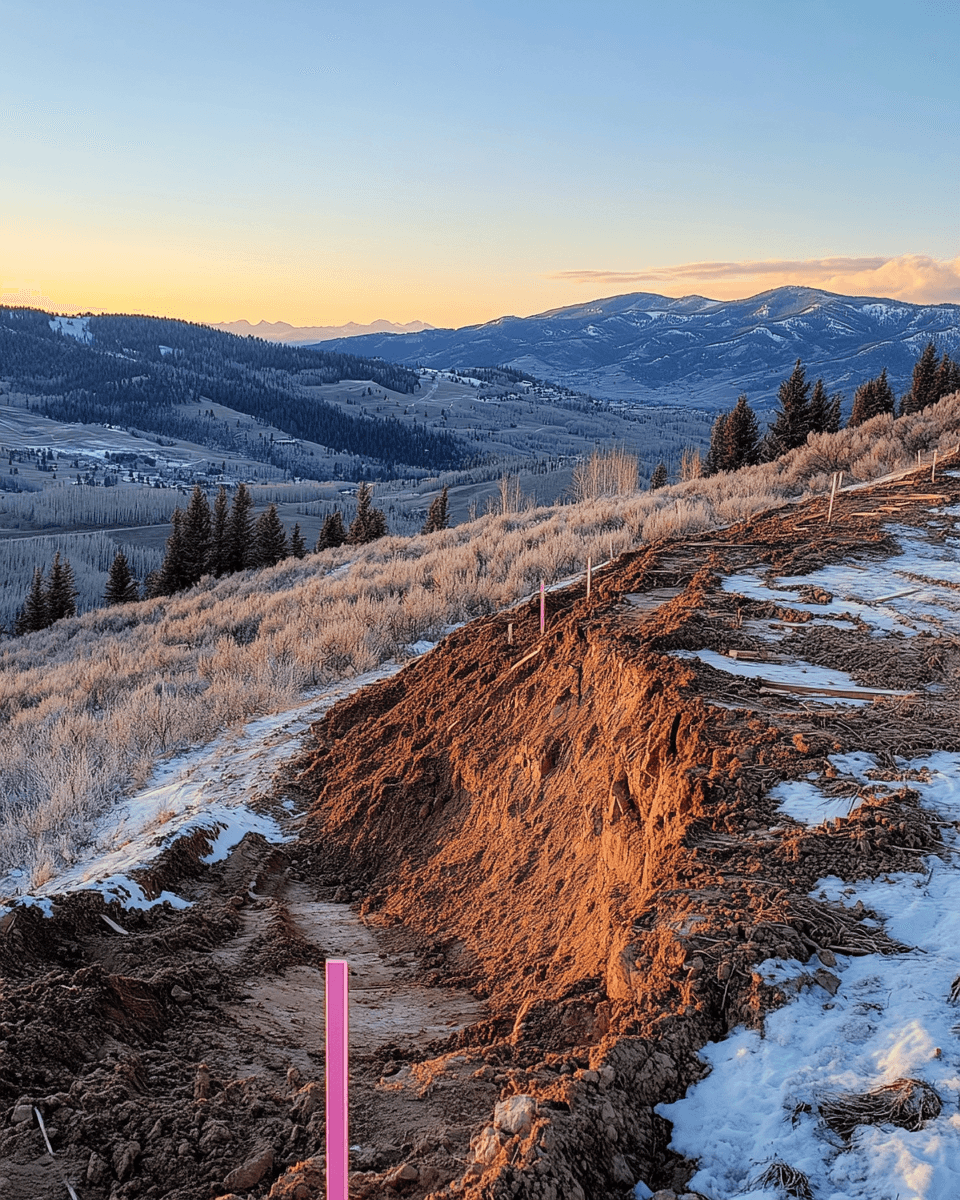
A rock wall that will last decades begins below grade. The foundation course is buried to a depth determined by the wall height, the soil conditions, and the surcharge loads behind the wall. For structural retaining walls, a geotechnical engineer specifies the foundation depth, drainage requirements, and backfill material. Skipping this step, or treating it as optional, is the most common reason rock walls fail within a few years of construction.
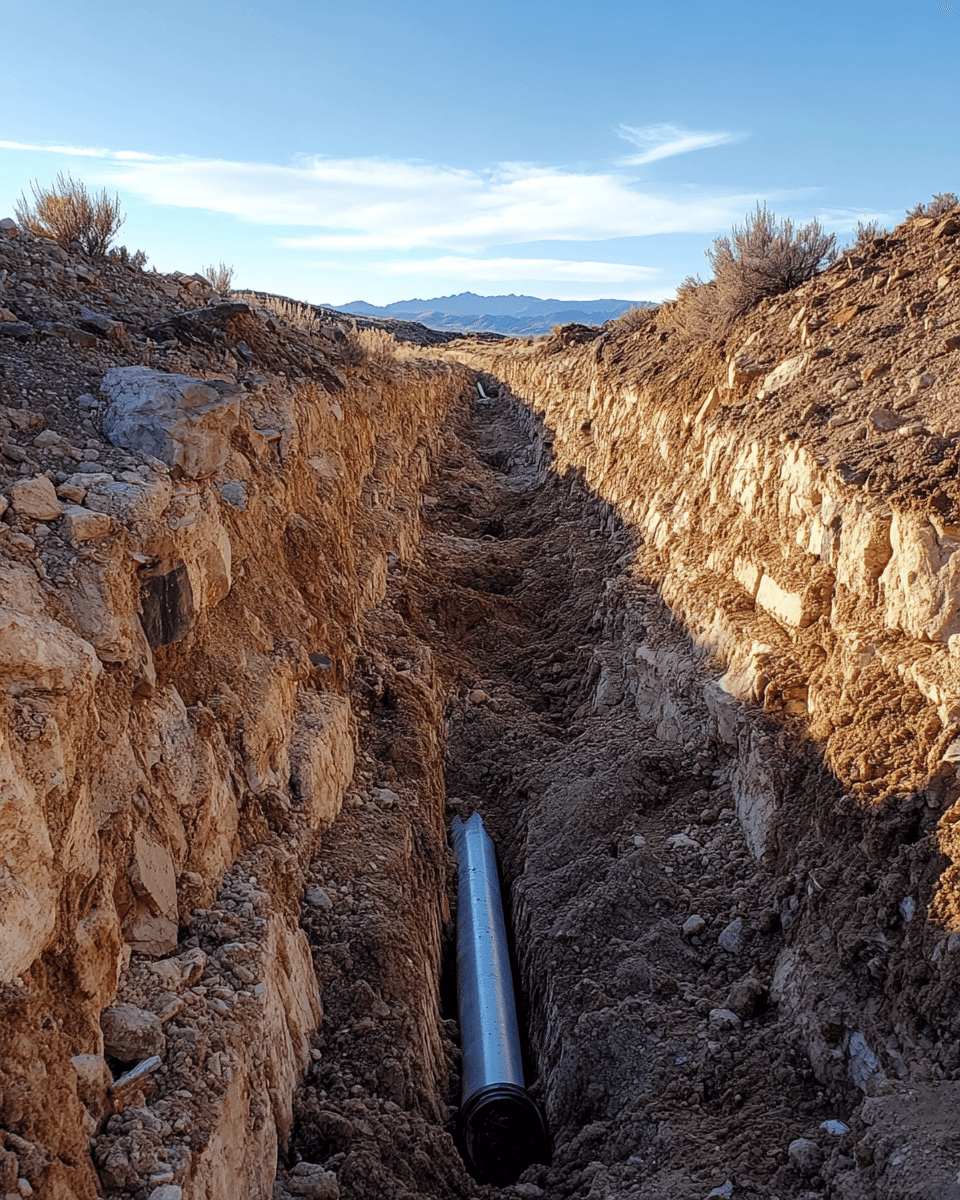
Behind every structural rock wall is a drainage system designed to prevent hydrostatic pressure from building up against the back face. Perforated drain pipe is installed at the base of the wall, surrounded by clean drain rock, and connected to a daylight outlet or storm drain. Without this drainage, water saturates the backfill, freezes in winter, and pushes the wall forward. Proper drainage is invisible when the wall is complete, but it is the single most important element of a long-lasting installation.
Placing Stone with Intention
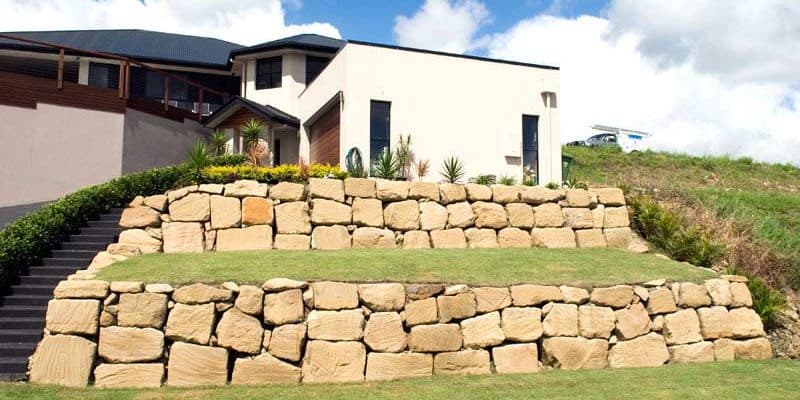
Rock wall construction is slow, deliberate work. Each stone is placed by an experienced operator using an excavator equipped with a thumb attachment, guided by a mason on the ground who directs the fit. The goal is tight joints, a consistent batter, and a face that looks natural rather than stacked. The best walls have an irregular rhythm: no two courses are identical, no single stone dominates, and the overall impression is of a structure that grew from the hillside.
On larger walls, the crew works in sections, setting the foundation course and first few lifts, then backfilling and compacting before continuing upward. This staged approach ensures that each section is structurally stable before weight is added above it. It is slower than building the full wall height in one pass, but it produces a wall that will not shift or settle over time.
The Finished Product
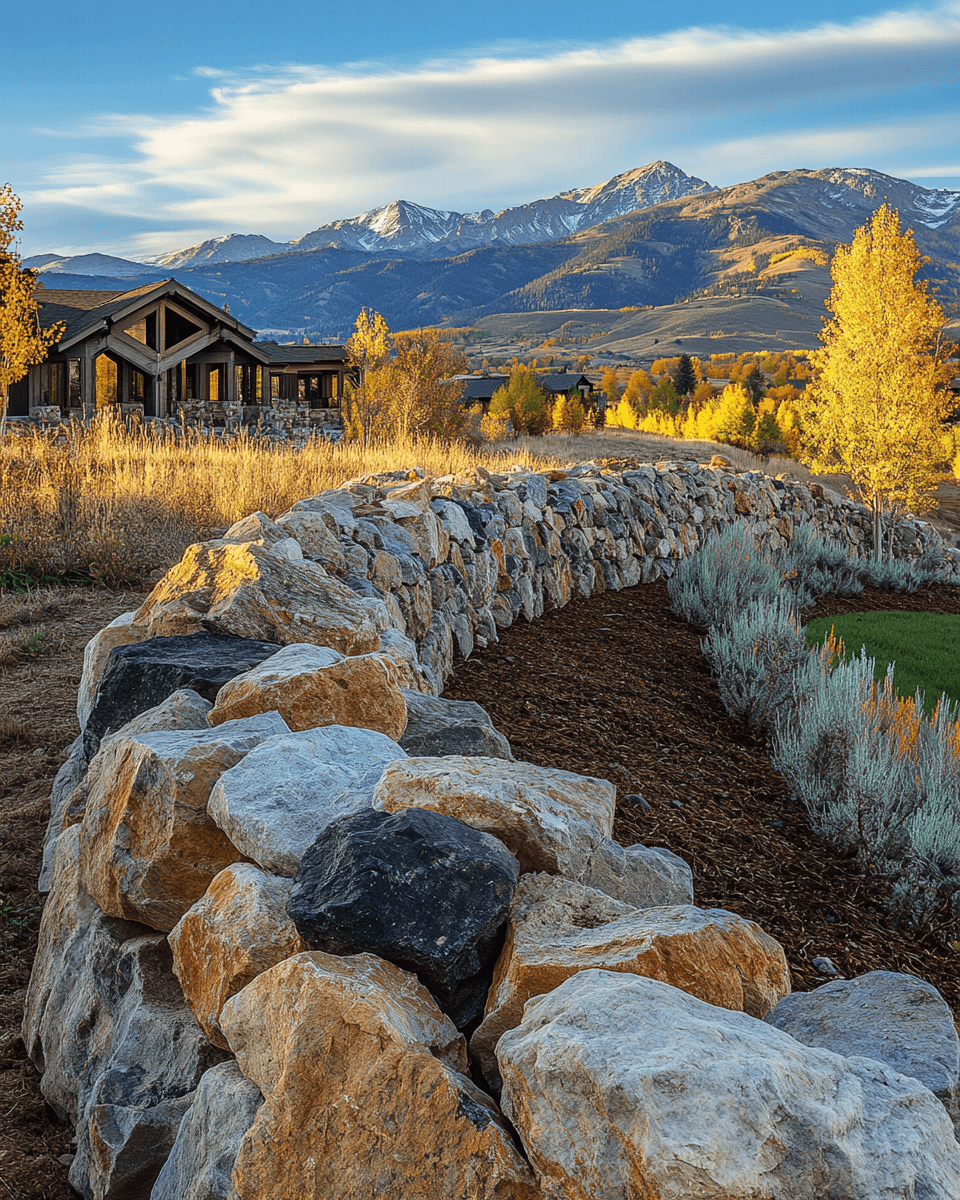
A well-built rock wall does not announce itself. It integrates with the landscape, frames the architecture, and performs its structural role without visible effort. Years after construction, the stone weathers and develops a patina that makes it indistinguishable from the natural rock around it. That seamless integration is the hallmark of quality rock wall work, and it only comes from a process that values precision, material quality, and the patience to do the job right.
RELATED SERVICES
Services referenced in this piece
LET'S BUILD
Ready to break ground?
Call, email, or send us the plans. We'll set up a site walk.