
Jun 4, 2025 · JKT
The Importance of Precision Utility Trenching in New Construction
Utility trenching rarely makes the highlight reel of a custom home build. There are no dramatic before-and-after photos, no architectural renderings to admire. But the trenches that carry water, sewer, electrical, gas, and communications lines to a home are among the most critical elements of the entire project. When they are done correctly, no one notices. When they are done poorly, the problems are expensive, disruptive, and sometimes dangerous.
Why Precision Matters Underground
Every utility line has specific requirements for depth, slope, bedding material, and separation from other lines. Sewer lines must maintain a consistent grade, typically one-quarter inch of fall per foot, to drain by gravity. If the trench is too shallow, the line will not meet code depth requirements and will be vulnerable to frost damage. If the grade is inconsistent, the line will develop low spots where solids accumulate, leading to blockages that may not appear until months or years after the home is occupied.
Water lines in the Wasatch Back must be buried below the frost line, which can exceed four feet in Park City and Heber City. Electrical conduits require specific burial depths that vary by voltage and whether the trench is under a driveway, landscaping, or open ground. Gas lines need separation distances from all other utilities. Getting any of these wrong means digging up finished work to make corrections, and in the worst case, it means a safety hazard.
The Trenching Process
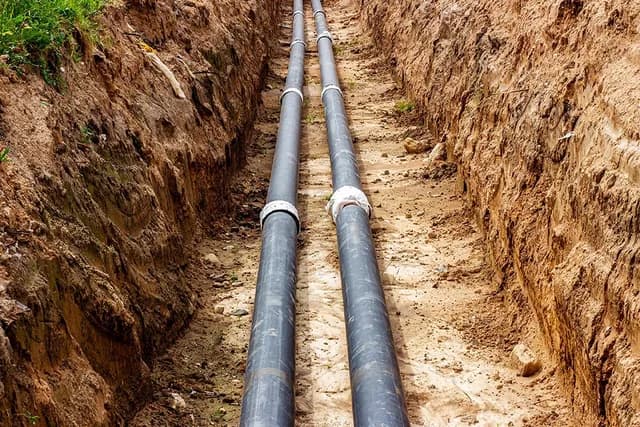
Proper utility trenching follows a strict sequence. The trench is cut to the specified width and depth using an excavator or dedicated trenching machine. The bottom of the trench is then prepared with imported bedding material, usually a clean granular fill that provides a stable, uniform surface for the pipe or conduit to rest on. The utility is placed on the bedding, inspected by the relevant authority, and then backfilled in controlled lifts with compaction at each stage.
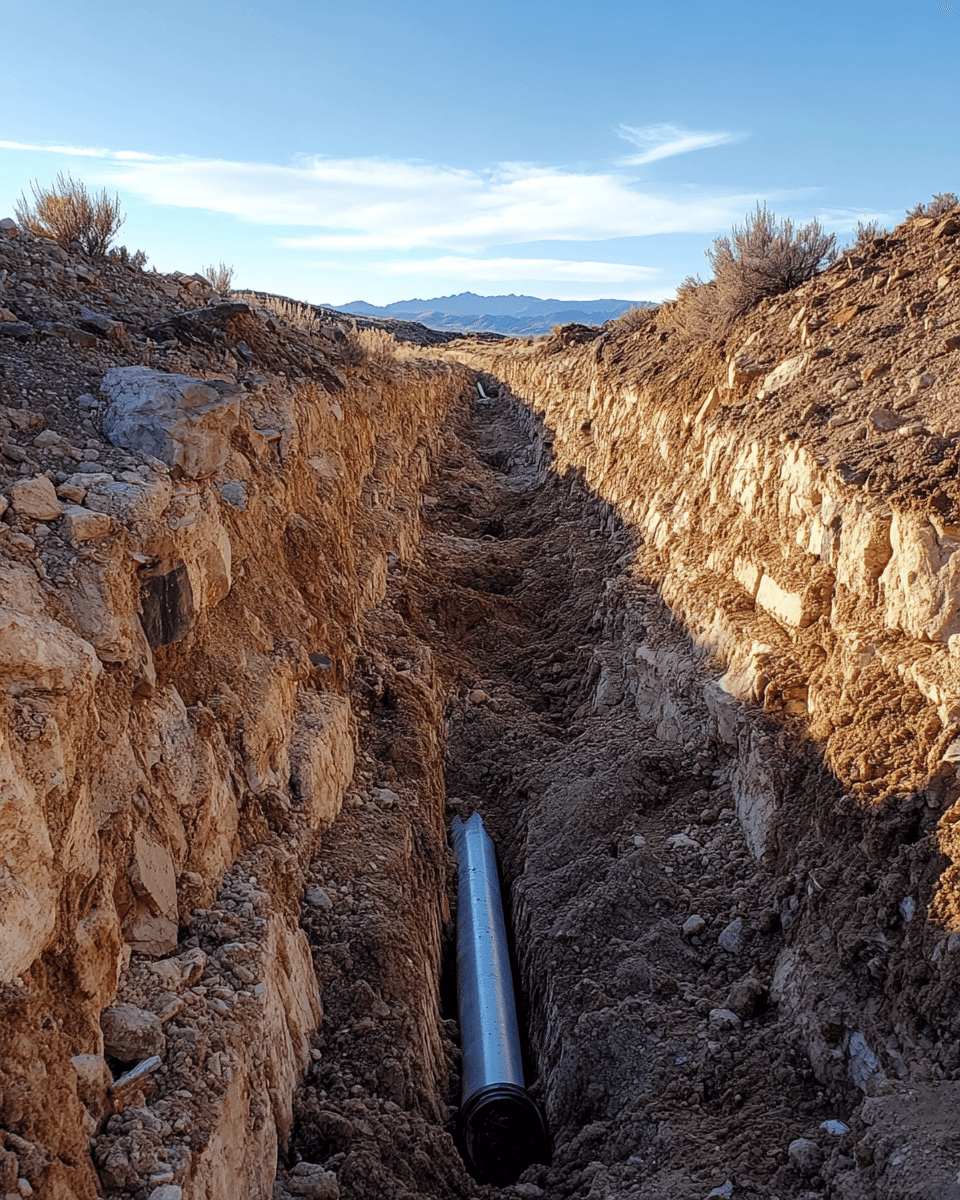
On mountain sites, trenching often encounters rock. When the trench alignment crosses a rock formation, the rock must be removed to the required depth plus additional clearance for bedding below and above the utility. This typically requires hydraulic breaking, which adds time and cost but cannot be avoided if the utility is to be properly protected. Laying a pipe directly on rock, without bedding, concentrates stress at contact points and leads to premature failure.
Coordination with Other Trades
Utility trenching does not happen in isolation. The excavation contractor must coordinate with the plumber, electrician, and utility providers to ensure that each line is in the correct location and at the correct depth before backfill begins. On a complex site with multiple utility runs, this coordination can involve daily communication and joint inspections.
- Plumbing rough-in must be complete before sewer and water trenches are backfilled
- Electrical conduit must be inspected and approved before cover
- Gas line pressure testing must pass before the trench is closed
- Communications conduit should include pull strings for future cable installation
The excavation contractor who understands these interdependencies and manages the sequencing proactively saves the entire project team time. A trench that is backfilled before an inspection, or a utility that is installed at the wrong depth, creates rework that affects not just the excavation crew but every trade that follows. Precision in utility trenching is not about moving dirt. It is about understanding the system that the dirt protects.
RELATED SERVICES
Services referenced in this piece

LET'S BUILD
Ready to break ground?
Call, email, or send us the plans. We'll set up a site walk.