

Jul 24, 2025 · JKT
Mastering Site Preparation on Steep Mountain Terrain
Some of the most sought-after home sites in Utah sit on slopes that would make flatland contractors walk away. Lots in Deer Valley, Promontory, and the upper benches of Heber Valley often feature grades exceeding 30 percent, mixed rock and clay soils, and limited access roads. Preparing these sites for construction requires a fundamentally different approach than conventional excavation.
Reading the Land Before Moving Dirt
Every steep-terrain project starts with a thorough site analysis. Before a single machine rolls onto the lot, the team reviews geotechnical reports, topographic surveys, and the architect's grading plan. On mountain sites, the relationship between cut and fill is critical. Moving too much material downhill creates disposal costs and erosion risk. Leaving too much in place means the foundation does not sit where the engineer intended.
Experienced operators walk the site and identify natural drainage patterns, rock outcroppings that may require hydraulic breaking, and areas where soil conditions change. In the Wasatch Back, it is common to encounter three or four distinct soil types within a single residential lot. Anticipating these transitions before the excavator bucket hits the ground prevents costly surprises during the dig.
Bench Cuts and Structural Stability
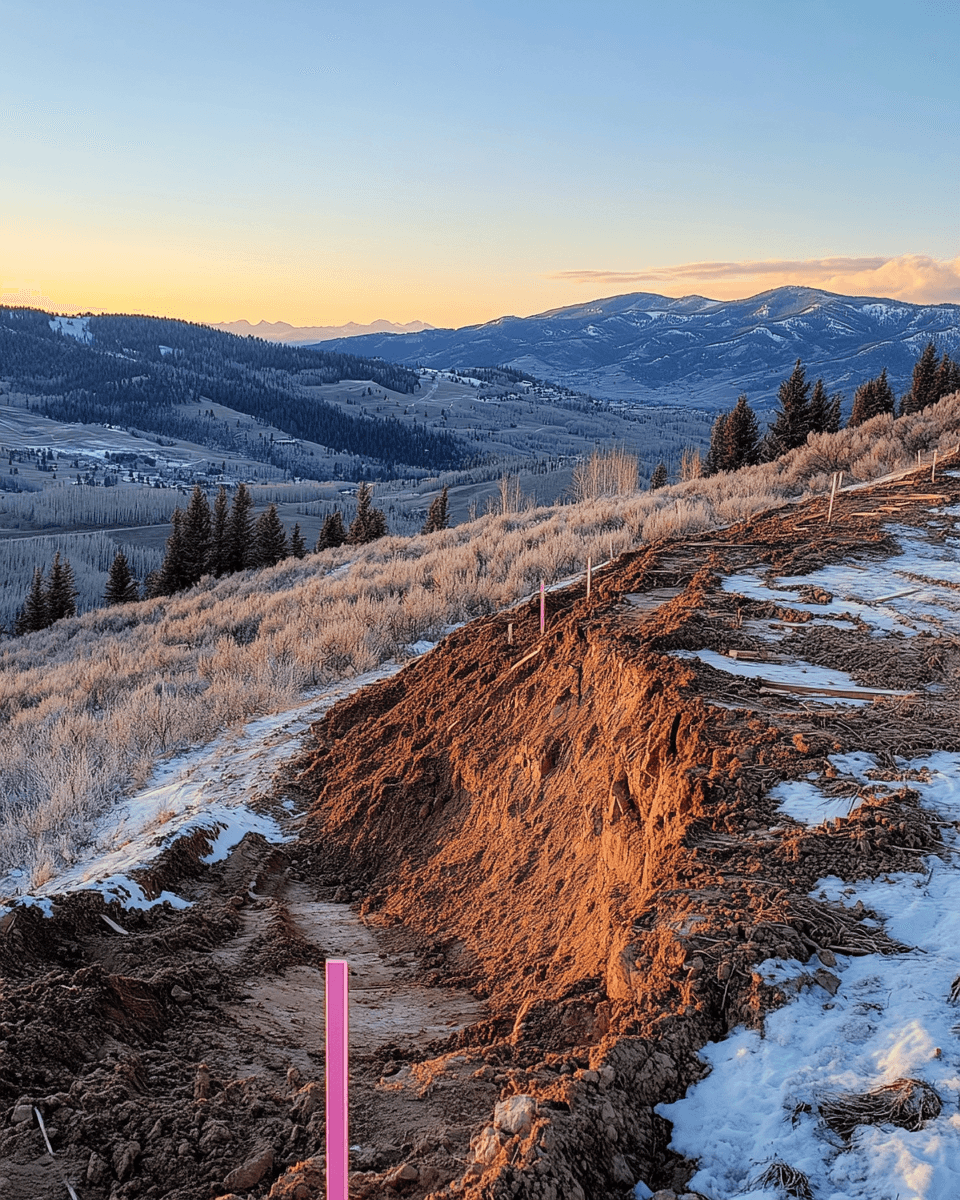
On a steep lot, the home typically sits on a series of benched terraces cut into the hillside. Each bench must be cut to precise elevations and compacted to meet the structural engineer's specifications. The tolerances are tight: a pad that is off by even a few inches can require expensive concrete adjustments during foundation pour.
Retaining the uphill cut face is equally important. Temporary shoring or rock anchors may be needed to keep the slope stable during construction. On some Park City sites, permanent soldier pile or shotcrete walls are designed into the foundation plan from the beginning. The excavation contractor coordinates directly with the structural engineer to ensure that each bench, each keyway, and each drainage channel is exactly where it needs to be.
Managing Water on the Mountain
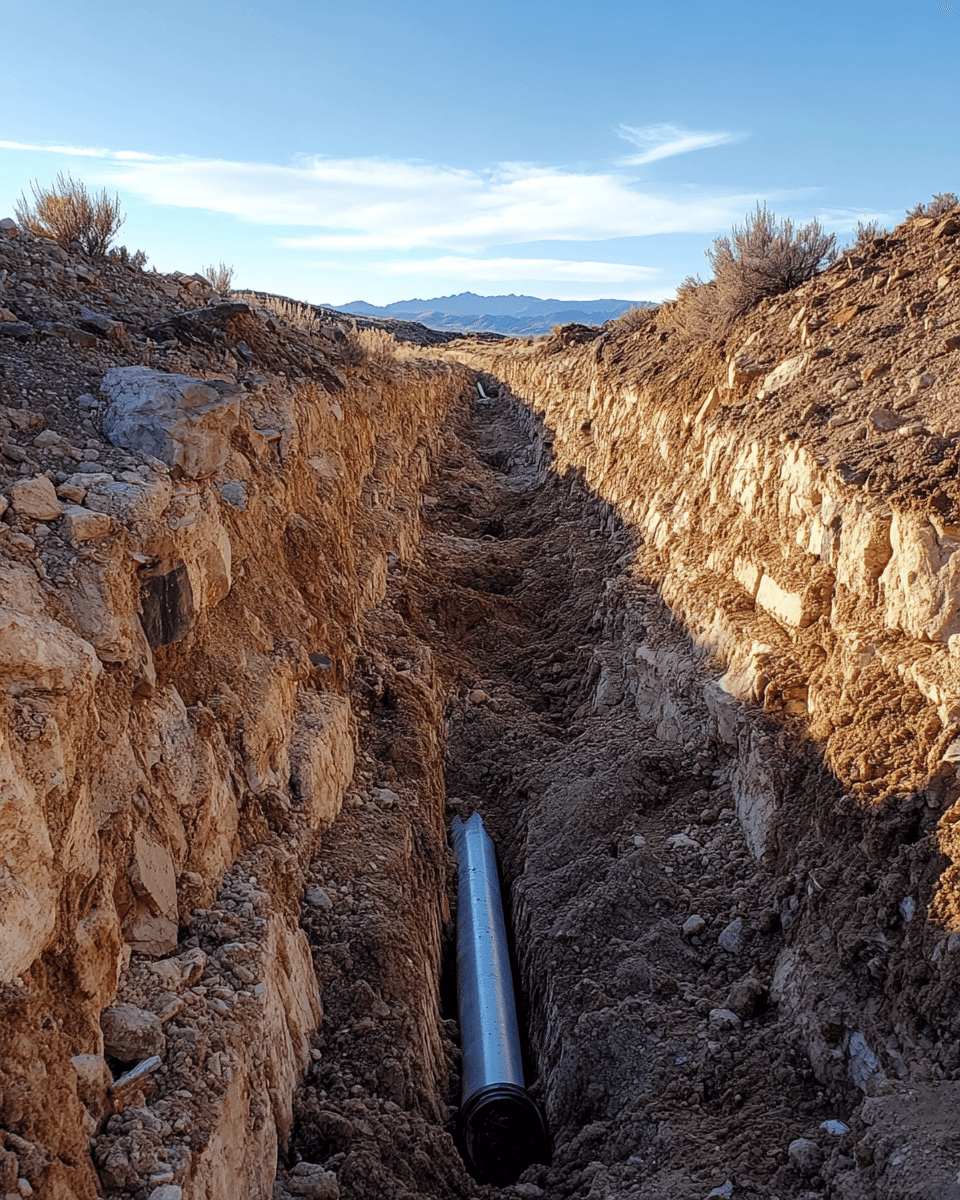
Water is the invisible adversary on every mountain building site. Spring snowmelt, afternoon thunderstorms, and natural seeps can saturate exposed soils and destabilize cut slopes in hours. Effective site preparation includes temporary drainage channels, silt fencing, and dewatering systems installed before the main excavation begins.
Summit and Wasatch counties enforce strict stormwater pollution prevention plans, and for good reason. Sediment runoff from a construction site can damage downstream properties and waterways. A contractor experienced in mountain work builds erosion control into the excavation plan from day one rather than treating it as an afterthought.
Access and Logistics at Elevation
Getting heavy equipment to a mountain building site is a project within a project. Many luxury lots in gated communities like Tuhaye and Glenwild are accessed by narrow, winding roads with weight restrictions. Haul trucks may need to take longer routes to avoid residential streets. Staging areas for material stockpiling are often limited, requiring precise scheduling to avoid bottlenecks.
The work season adds another constraint. At elevations above 7,000 feet, frozen ground can persist into late April, and early snowfall in October can shut down operations. Experienced mountain contractors build weather contingencies into their schedules and prioritize the most elevation-sensitive work during the narrow window of stable conditions. The result is a building pad delivered on time and built to last, no matter how steep the terrain.
RELATED SERVICES
Services referenced in this piece
LET'S BUILD
Ready to break ground?
Call, email, or send us the plans. We'll set up a site walk.